▌Symbol Usage Guidelines
Protecting the Integrity of National Symbols
The national symbols of Dangun Sovereign Neutral State represent public authority, identity, heritage, and responsibility.
Their use must preserve:
- accuracy;
- dignity;
- consistency;
- authenticity;
- public trust.
General Requirements
Users should:
- obtain artwork from an authorised source;
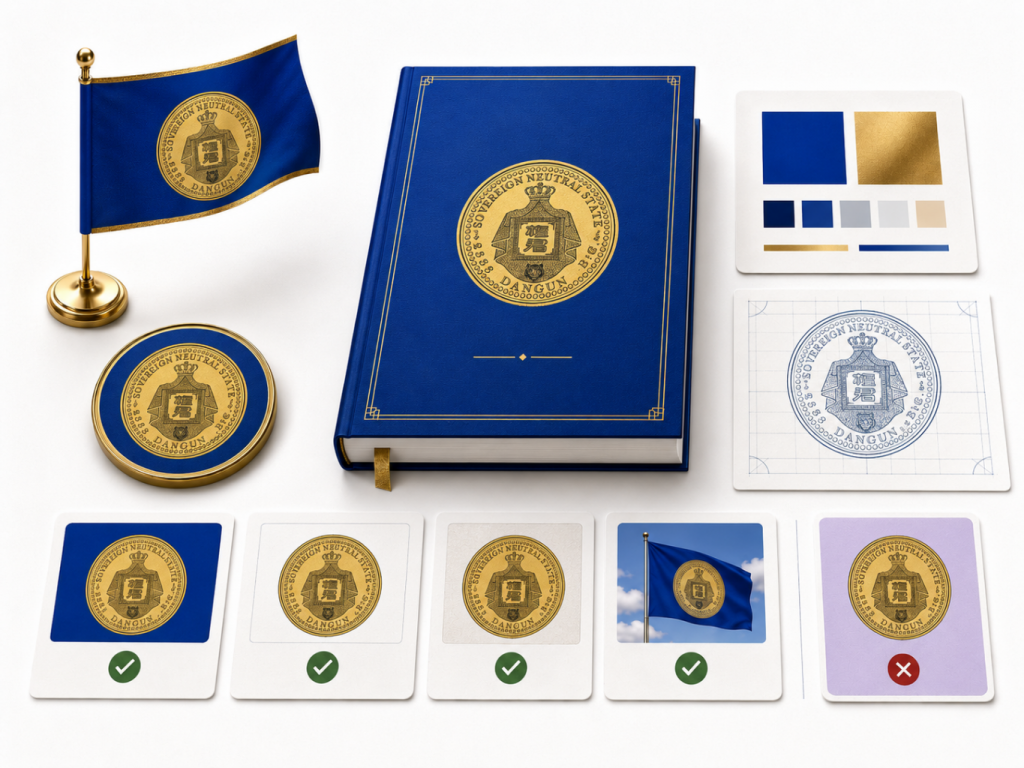
- preserve the original proportions;
- use approved colours;
- maintain sufficient clear space;
- ensure high visual quality;
- follow the latest official standards;
- obtain written permission where required.
Prohibited Alterations
National symbols must not be:
- stretched or compressed;
- recoloured;
- cropped improperly;
- rotated without ceremonial justification;
- redrawn inaccurately;
- given unapproved visual effects;
- combined with other symbols or trademarks;
- placed on visually conflicting backgrounds;
- surrounded by unauthorised wording.
Government Use
Government offices and authorised institutions may use the symbols for:
- official correspondence;
- government websites;
- certificates;
- identification;
- reports;
- public signage;
- official events;
- treaties and formal communications;
- public information.
Commercial Use
Commercial use requires prior written approval.
Approval should consider:
- the nature of the product or service;
- the accuracy of reproduction;
- the proposed context;
- the risk of public confusion;
- protection of official identity;
- compliance with applicable laws and regulations.
Educational and Media Use
Educational, historical, editorial, and cultural use may be permitted when:
- the symbol is reproduced accurately;
- its official status is not misrepresented;
- the context is respectful;
- the use does not imply endorsement;
- the source is properly identified where appropriate.
Fraudulent and Misleading Use
National symbols must never be used to:
- create false government documents;
- impersonate an official;
- issue unauthorised identification;
- solicit unauthorised payments;
- promote fraudulent financial services;
- falsely claim diplomatic recognition;
- issue unauthorised certificates;
- mislead the public about authority or affiliation.
Suspicious or unauthorised use should be reported through an official government contact channel.